Trophée des Champions Confirmed for Exotic International Venue: A Risk Advisor’s Verification Guide
Yes, the Trophée des Champions confirmed for an exotic international venue is the news story currently filling sports feeds. But in risk-management terms, a headline is not a source. The fixture is real only when the organizing league, the hosting federation, and the venue operator publish matching statements. Everything before that point is promotion, speculation, or a combination of the two. In this guide, I treat the announcement the way I would audit a high-value contract: break it into claims, test each claim against a primary source, and flag anything that does not line up.
Five key findings behind the venue announcement
- An international venue fits a fifteen-year pattern. The Trophée des Champions has repeatedly left French soil, with past editions hosted in Montreal, Tunis, Tangier, Libreville, Beijing, Shenzhen, New Jersey, and Tel Aviv. So the idea of an exotic host city is entirely consistent with the tournament’s history.
- The word “confirmed” is doing heavy lifting. The current wave of coverage appears to originate from secondhand reports rather than from an official league press release. That does not prove the news is false. It simply means the confirmation chain is incomplete.
- The term “exotic” is a commercial filter, not a logistical one. Headlines use it because it generates clicks and ticket interest. It tells you nothing about travel conditions, visa requirements, stadium security, or the cost of getting there.
- Third-party platforms are amplifying the story quickly. Sports and betting aggregators pick up the same announcement and repackage it with odds previews and promotional content. The speed of that amplification does not add credibility to the underlying claim.
- The risk surface for fans expands immediately. Once a match is tied to an exotic venue, fans must navigate travel booking, hotel reservations, ticket resale, broadcast access, and possibly wagering. Each of those steps creates an opportunity for scams and misinformation.
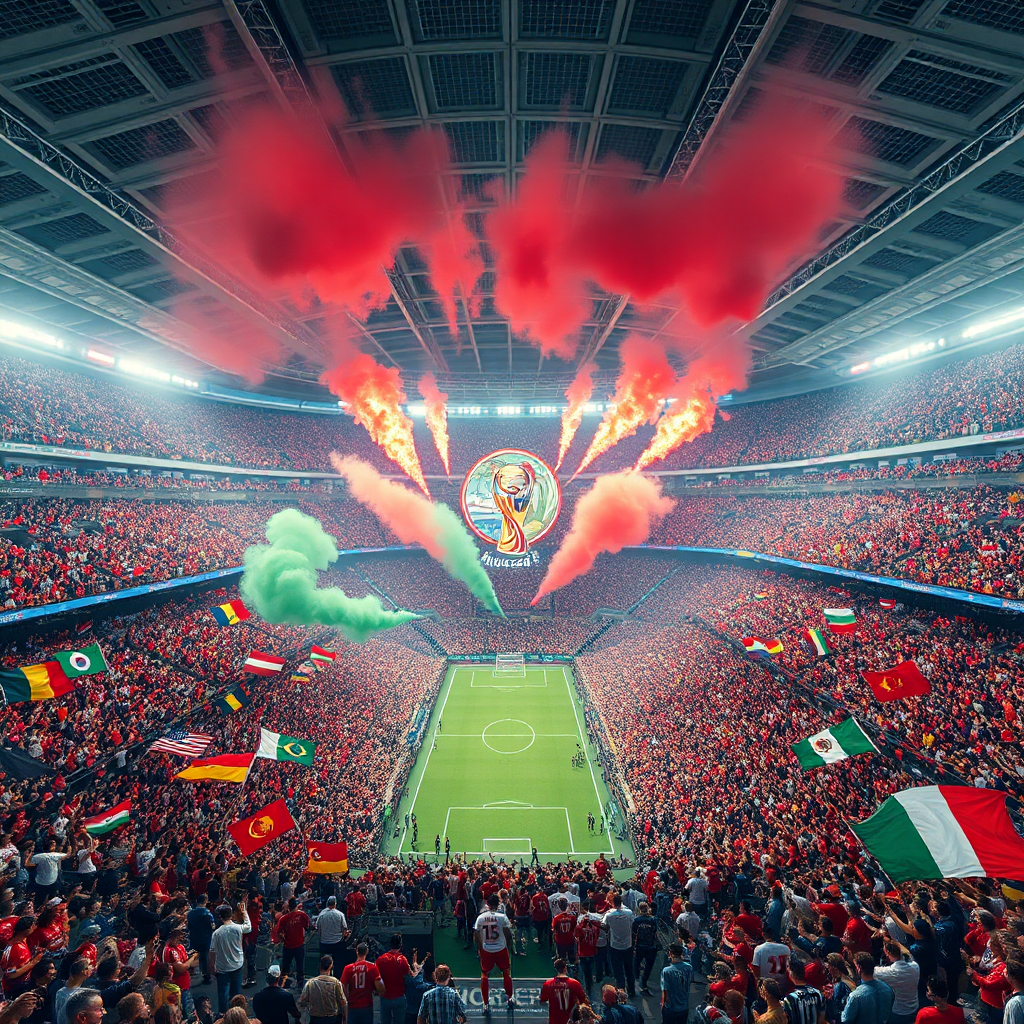
 Hình minh hoạ: NK88
What the announcement actually claims
When you strip the excitement away, the circulating announcement contains five separate claims. Each one needs a different verification method.
Claim 1: “Confirmed” — by whom, exactly?
In professional football, a fixture is confirmed when at least the organizing body and the host venue have signed off. Before you accept the word “confirmed,” ask three questions. Is there a press release on the official league website? Does it state the exact date and the local kick-off time? Does the host venue list the event on its own calendar? If the answer to any of these is no, the confirmation should be treated as provisional.
Aggregator platforms often remove those conditions from the headline. The news arrives as a finished product, with the source chain hidden. That is precisely where a reader should slow down.
Claim 2: “Exotic” is a marketing word, not a verification category
For a fan in Europe, a match in Asia or the Middle East may feel exotic. For the organizers, it is a familiar commercial exercise. Hosting the French super cup abroad expands the league’s brand, activates fan bases in growing markets, and attracts tourism revenue. Cities sometimes compete for the right to host, because marquee teams bring exposure.
None of that makes the venue unsafe, of course. But the exotic framing feeds emotional decisions. When you plan a trip around a word like that, you are making decisions based on fantasy, not logistics. Check the actual city infrastructure, weather, transport options, and security protocols before you invest money.
Claim 3: The calendar exists, but which clock governs it?
An international venue introduces a classic verification trap: time zones. A match played thousands of kilometers from Paris will have a local start time that looks different in every region. Before the announcement is treated as a confirmed fact, the kick-off time should be expressed in local time with a UTC offset.
If the published time only appears as a single number without a time zone, the information is incomplete. That matters for anyone booking flights, arranging broadcast viewing, or setting reminders for betting windows.
Claim 4: Broadcast rights open a secondary verification window
When a match is staged abroad, broadcast rights are sold separately for each region. Official broadcasters will announce their coverage through their own channels. Any streaming link embedded in a third-party article or shared through social media is automatically suspect.
Your verification checklist should include a search of the broadcaster lineup for your country. If the match is not listed with a licensed broadcaster, do not assume it will be freely viewable. That assumption is exactly what scam streaming sites exploit.
Claim 5: Betting markets move faster than official contracts
Bookmakers and aggregators may open markets for the match before the venue contract is fully public. Early odds create engagement, and engagement creates deposits. But betting on an unverified fixture introduces an additional layer of risk. The date, the venue, or even the participating teams could still shift if the confirmation chain falls apart.
If you choose to engage with betting content on this event, treat it as a high-uncertainty situation. Set a personal bankroll limit before the event opens, never chase losses, and keep the amount small enough that a postponed fixture cannot create financial stress. Some platforms, including NK88, will pair the same announcement with odds previews and match analysis, which is a reminder to separate news from promotion when reading.
Official communication vs. platform promotion: a comparison
| Verification item | What an official source should show | What a promoted version often shows |
|---|---|---|
| Venue confirmation | League press release naming the host city and stadium, with a publication date | “According to reports” language or a link to another news article |
| Ticketing | Named authorized ticketing partner and a clear refund policy | “Limited seats” urgency, “best price” countdown, or resale offers |
| Match time | Local time plus UTC offset for each region | A single time notation with no time zone reference |
| Broadcast | List of licensed broadcasters for each territory | Embedded streaming links of unknown origin |
| Betting context | No direct odds published on official league pages | Odds banners, welcome bonuses, and app download prompts placed beside the article |

Who this fits and who should skip it
This is for you if…
- You are a traveling fan who wants to confirm every detail of the event before booking flights or accommodation.
- You follow the Trophée des Champions through aggregator platforms and want to separate actual news from sponsorship content.
- You are a bettor who treats fixture announcements as market signals rather than guarantees and wants a structured verification process.
Skip this approach if…
- You expect a purely neutral event summary with no reference to betting platforms or promotional materials.
- You need final verified ticket prices today; those details are not yet available through the current announcement chain.
- You are required to finalize a visa application immediately; waiting for a primary-source confirmation may be the safer route.

Practical recommendations before you act
- Find the primary source. Open the official league website and search for an announcement dated around the time of this news cycle. If nothing appears, the fixture is not yet officially confirmed.
- Check the venue’s own calendar. A credible venue lists the event on its official website. If the stadium has no mention of the match, treat the report as premature.
- Buy tickets only through authorized channels. Once official ticketing opens, the league and the venue will name a single authorized partner. Do not rely on social media resale posts or third-party brokers.
- Convert the kick-off time carefully. Verify the local time in the host city and compare it with your own time zone before arranging anything.
- Set a personal budget for betting. If you engage with odds linked to this event, define your maximum loss in advance and do not adjust it upward. The uncertainty of the fixture is itself a reason to keep stakes low.
- Treat mobile apps as aggregators, not as official sources. An application that collects news, odds, and notifications does not issue official confirmations. The TẢI APP NK88 page, for example, will present the same aggregated feed you can already see on a desktop browser; it cannot produce the missing primary document. Install it only after you have verified the event elsewhere.
- Set a verification deadline. If no official league statement appears within several days, treat the “confirmed” headline as speculation and avoid any financial commitment tied to it.
The conditional verdict
If you trace the announcement back to an official league statement, the Trophée des Champions confirmed for an exotic international venue becomes a legitimate event with real travel, viewing, and sporting interest. Under those conditions, the exotic venue is a feature, not a flaw, and the match could be a memorable occasion for fans who plan carefully.
If the closest evidence you can find is a headline on a third-party platform, the verdict must remain conditional. The venue may be real. The ambition may be real. But the confirmation is not yet complete. Until the league, the host federation, and the venue operator close the gap between the claim and the document trail, the responsible move is to hold off on tickets, trips, and wagers.